Healthcare
Where a mechanism
becomes a care plan
Doctor of Pharmacy candidate at the Université de Montréal, class of 2027 — training across psychiatric, long-term care and community settings in Montréal, and volunteering with mobile clinics in rural Panama.

Banner photograph by Roberto Sorin on Unsplash.
Research taught me how a pathogen works. Pharmacy is where that knowledge has to survive contact with an actual person — someone with six other prescriptions, a language preference, a schedule, and a reason to be sceptical.
Most of my clinical hours are at a Costco Pharmacy in Laval, in community/retail practice. That is where the day-to-day clinical work actually happens: patient counselling, care plans, follow-ups on blood work we have prescribed, OTC counselling, and patient education and prevention.
Alongside that I spent two summers as a part-time student at the Institut universitaire en santé mentale de Montréal, within the CIUSSS de l'Est-de-l'Île-de-Montréal — preparing and delivering manual-dose medication, doing medication reconciliation, and occasionally shadowing the psychiatric pharmacists. It was a valuable exposure to psychiatric pharmacy, though a smaller share of my overall clinical hours than the retail work.
I have also completed a long-term care rotation, and — early in the pandemic — spent a summer doing clinical triage at a Laval family medicine group. Different settings, same test: can you explain a therapy clearly enough that someone will actually follow it?
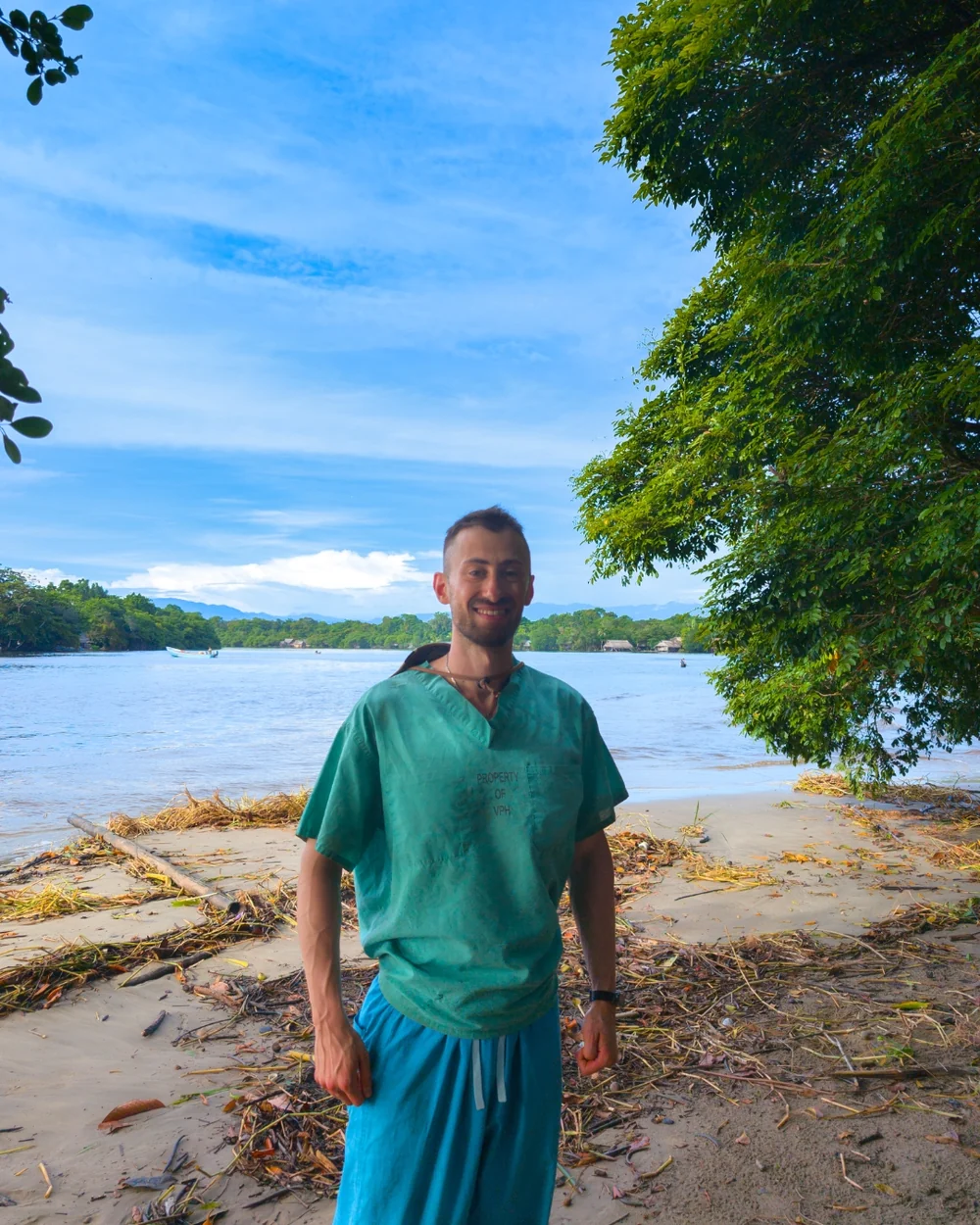
Outside Québec, I have volunteered with Floating Doctors in Bocas del Toro, Panama, joining mobile clinics that reach Ngäbe-Buglé communities by boat and on foot — a very different setting from a Montréal pharmacy, with far fewer resources on hand.
Speaking English, French, Spanish, Portuguese, Italian, and Western Armenian has been genuinely useful in both settings — at a counter in Montréal and on a riverbank in Panama.
Scope of this page
This page is a record of education and clinical training. It is not an offer of pharmacy services, it does not solicit patients, and nothing on it is pharmaceutical or medical advice. I am a Pharm.D. candidate at the Université de Montréal and registered as a student with the Ordre des pharmaciens du Québec — not yet a licensed pharmacist, and I do not use that reserved title.
If you need pharmaceutical advice, consult your own pharmacist. My other work — Materos Unidos and personal training — is entirely separate from this training and is described without reference to it.
Clinical experience
Placements & practice
-
2023 — present
Pharmacy student, retail
Costco Wholesale, Laval
The largest share of my clinical hours to date: patient counselling, care plans, follow-ups on blood work we have prescribed, OTC counselling, and patient education and prevention, under the supervision of a licensed pharmacist.
-
Summers, 2 seasons
Part-time student, psychiatric pharmacy
Institut universitaire en santé mentale de Montréal — CIUSSS de l'Est-de-l'Île-de-Montréal
Preparing and delivering manual-dose medication, performing patient medication reconciliation (bilan comparatif des médicaments), occasionally shadowing psychiatric pharmacists, and holding responsibility for clozapine patients.
-
May 2025
Pharmacy intern, long-term care
CHSLD Idola St-Jean — CISSS de Laval
Curricular rotation in a long-term care residence: shadowing the unit pharmacist and writing clinical notes.
-
May 2024
Community pharmacy intern
Jean Coutu — Émilie Larivière & Jean-Michel Dubeau
A full-time month in community practice: patient follow-ups, consultations, and care plans.
-
2020
COVID-19 clinical triage
GMF Médi-Centre Chomedey
Screened arriving patients under pandemic protocol — temperature checks, masking, and hand hygiene compliance.
Credentials
Qualifications in progress and in hand
Doctor of Pharmacy (Pharm.D.)
Université de Montréal, 2023–2027
Registered pharmacy student
Ordre des pharmaciens du Québec
Basic Life Support
St. John Ambulance Canada
Panama
Mobile clinics with Floating Doctors
Floating Doctors has run a permanent programme in Bocas del Toro, Panama since 2011, serving more than twenty-five remote Indigenous Ngäbe-Buglé communities across thousands of square miles of jungle, mountain and mangrove. Each community is visited at least every three months, and the clinics travel by boat, by packhorse, or on foot.
For most of the people who come, it is the only medical service available. A clinic day can mean anywhere from thirty to two hundred patients, worked through with a well-stocked mobile pharmacy, a portable ultrasound, basic labs, and a great deal of old-fashioned clinical examination. On multi-day trips the team sleeps in hammocks in whatever space the host community offers. What Floating Doctors has built and sustained since 2011 is a genuinely remarkable organisation, and I was glad simply to be useful within it.
I volunteered as a student, which mostly meant taking histories in Spanish, helping run the pharmacy table, and repacking it all again at the end of the week. It gave me a clearer picture of what pharmacy looks like when you strip away the building, and a lot of respect for the team that does this work year-round.