Research
Seven papers on pathogens
that deserve more attention
Emerging and neglected viruses — Yezo, Sosuga, Aleutian mink disease virus, SARS-CoV-2 — studied at McGill and the Université de Montréal between 2021 and today.
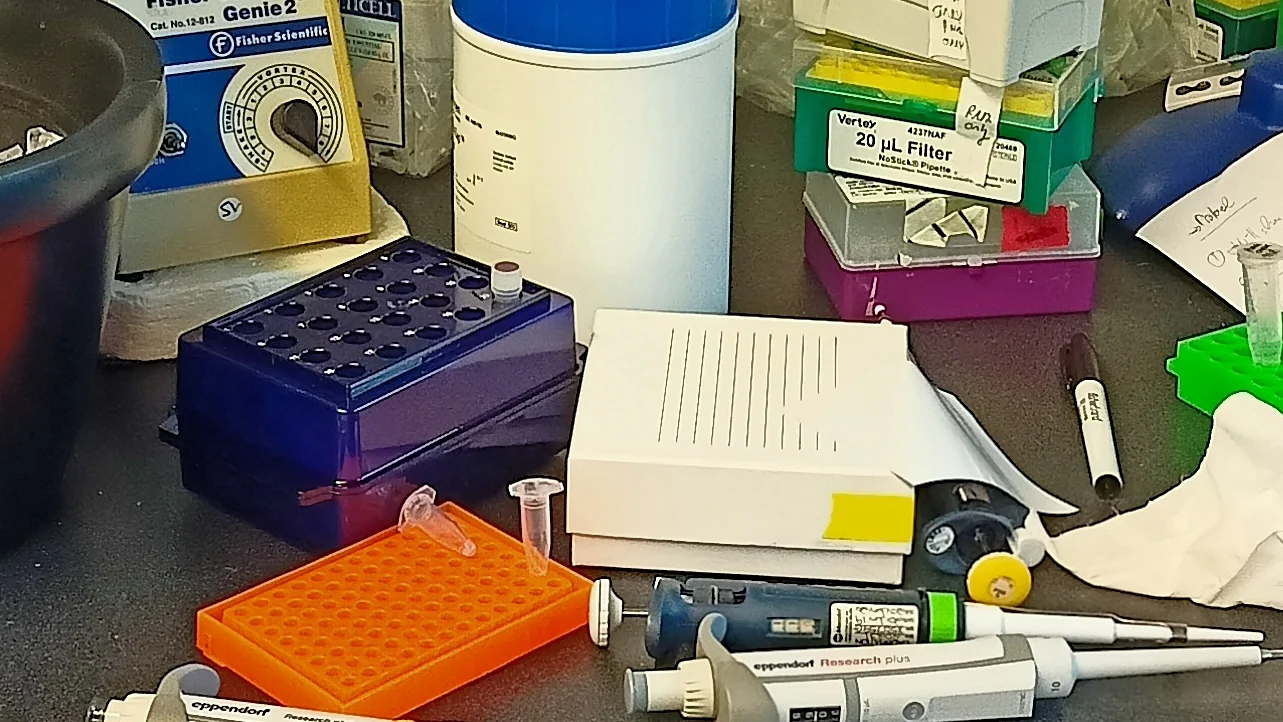
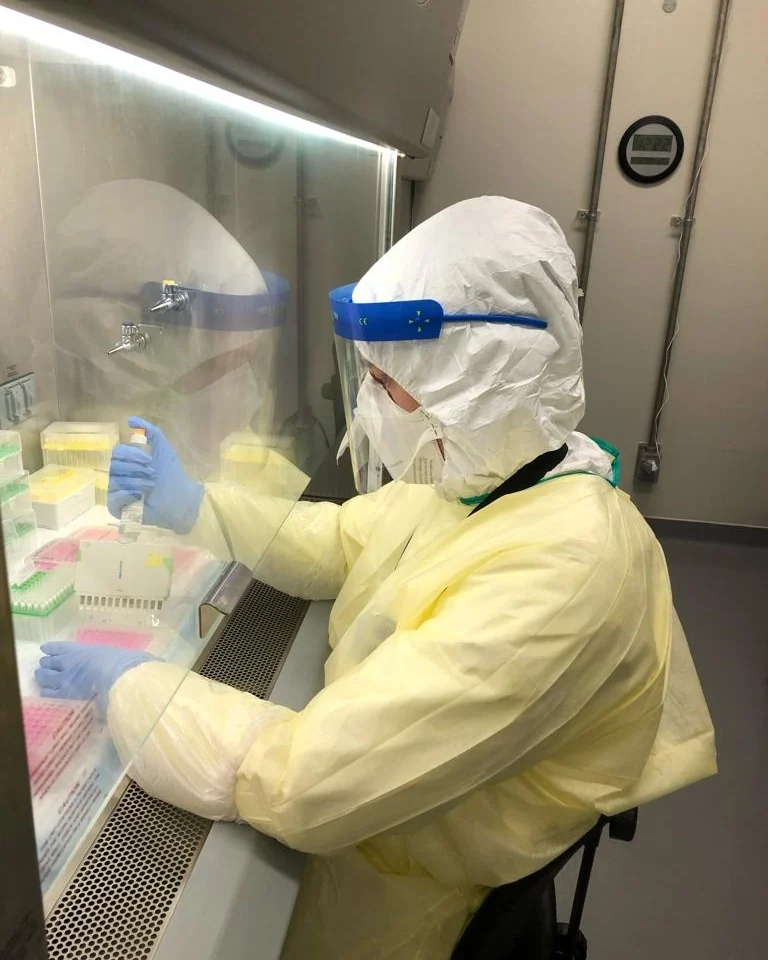
My training sits between human genetics and veterinary science, which is a stranger combination than it sounds. At McGill I worked in Dr. Silvia Vidal’s lab in the Department of Human Genetics, inside a BSL-3 containment facility, on how SARS-CoV-2 behaves in hosts whose immune systems cannot clear it. Alongside that, and still today, I work with Dr. Levon Abrahamyan at the Université de Montréal’s veterinary faculty. My master’s thesis looked at the SLAM-associated protein and how the virus evolves inside a single host.
What I like about this work is unglamorous: most of these pathogens have a handful of papers to their name. Someone has to write the review that the next person starts from. Several of the papers below are that kind of paper.
Publications
Peer-reviewed work
Listed most recent first. Every entry links to PubMed or the publisher's full text.
-
2025
The emerging tick-borne Yezo virus – current knowledge, challenges, and perspectives
Yezo virus is a tick-borne orthonairovirus first identified in Japan in 2021 that causes acute fever with thrombocytopenia and leukopenia. This review consolidates what is known about its biology, transmission, and documented patient cases, and argues for a One Health approach to prepare for its potential spread.
-
2024
The latest advancements in Sosuga virus (SOSV) research
Sosuga virus is a bat-borne paramyxovirus discovered in 2012 in a hospitalised biologist returning from Africa. The paper reviews its disease mechanisms, available animal models, and the antiviral strategies that could matter if it resurfaces.
-
2024
Design, infectability, and transcriptomic analysis of transregionally differentiated and scalable lung organoids derived from adult bronchial cells
The team grew lung organoids from accessible adult tracheal and bronchial cells rather than deep-lung biopsies. They matured in 21 days and could be infected with both SARS-CoV-2 and influenza H1N1 without collapsing — a scalable model for respiratory virus work. My contribution was the SARS-CoV-2 infection of the organoids, RNA extraction, and quantification of viral RNA copies in lysate and supernatant.
-
2024
In Silico Identification of Potential Inhibitors of SARS-CoV-2 Main Protease (Mpro)
Virtual screening and molecular dynamics were used to predict how candidate compounds bind the SARS-CoV-2 main protease. Twenty-two hits from a public compound library and ten in-house molecules emerged as leads — chemically stable, inexpensive, and straightforward to synthesise.
-
2022
Identifying Markers of Emerging SARS-CoV-2 Variants in Patients With Secondary Immunodeficiency
A review of how SARS-CoV-2 evolves inside patients whose immune systems are suppressed or compromised. Recurring mutations — concentrated in the spike protein — appear under prolonged infection and antibody therapy, which matters directly for anticipating where new variants of concern come from.
-
2021
Evaluation of Inhibitory Activity In Silico of In-House Thiomorpholine Compounds between the ACE2 Receptor and S1 Subunit of SARS-CoV-2 Spike
Molecular docking and dynamics were used to test whether in-house thiomorpholine compounds could block the interaction between the SARS-CoV-2 spike protein and the human ACE2 receptor — the doorway the virus uses to enter cells. One compound, LQM322, was the strongest candidate.
-
2021
AMDV Vaccine: Challenges and Perspectives
Aleutian mink disease virus causes serious and often fatal disease on mink farms, and no vaccine exists. This review traces every attempt made so far, weighs the alternative control measures, and makes the case that a working vaccine is the only durable answer.
Recognition
Excellence award, best poster, and three funded scholarships
In December 2022 the McGill Department of Human Genetics awarded me an Excellence Award for performance over the academic year. In May 2023 I received a best poster presentation award at the Infectious Diseases and Immunity in Global Health Research Day at the Research Institute of the MUHC.
The master's work was funded by an FRQS Master's Training award and a Canada Graduate Scholarship (CGS-M); the earlier veterinary virology work was funded by an NSERC Undergraduate Student Research Award.